Houseplants add warmth, colour and personality to any home, but some beautiful varieties can pose serious risks to curious cats.
Knowing which plants are toxic to cats can help you create a safer, more comfortable living space without giving up greenery altogether.
From popular trailing plants to elegant flowering varieties, these 10 common houseplants deserve extra attention, especially if your cat enjoys nibbling on leaves or exploring flowerpots.
1. True Lilies: The Most Dangerous Flowers for Cats
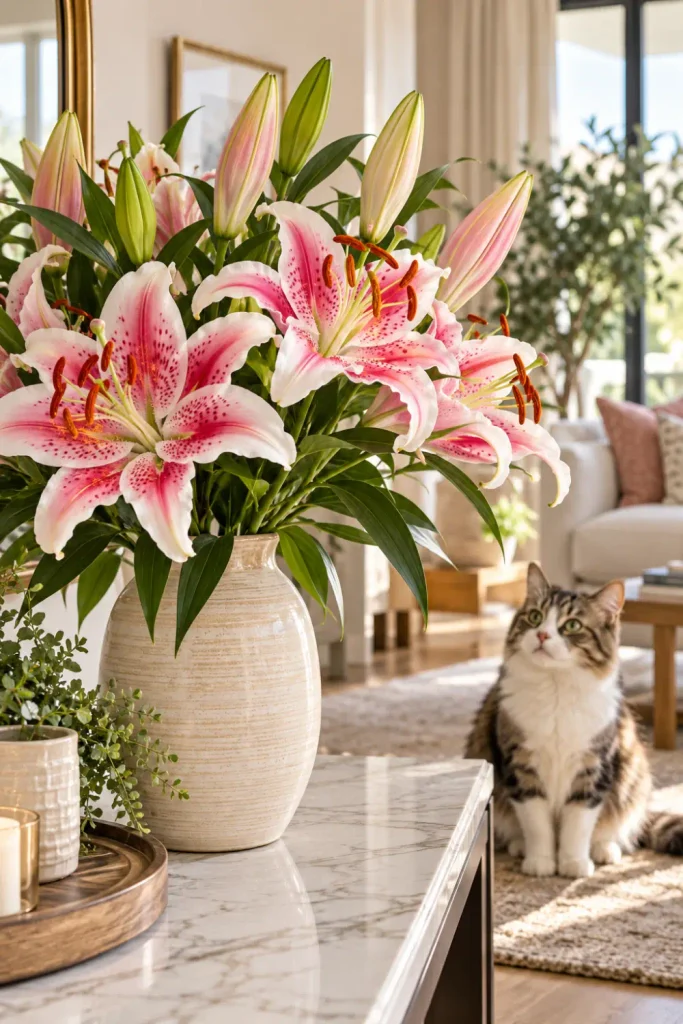
Toxicity: Extremely dangerous
True lilies and daylilies are among the most dangerous plants for cats. Easter, Stargazer, Tiger and Asiatic lilies can cause acute kidney failure, even after a very small exposure.
Every part of these plants, including their pollen and vase water, can be hazardous.
Simple steps:
- Remove true lilies and daylilies from your home, including flowers in bouquets.
- If your cat touches or ingests any part of a true lily, contact a veterinarian immediately, even if there are no symptoms.
– Tip: Check every flower in a bouquet before bringing it home. Never assume a lily is safe simply because it is sold as a decorative flower.
2. Sago Palm: A Pretty Plant With Serious Risks
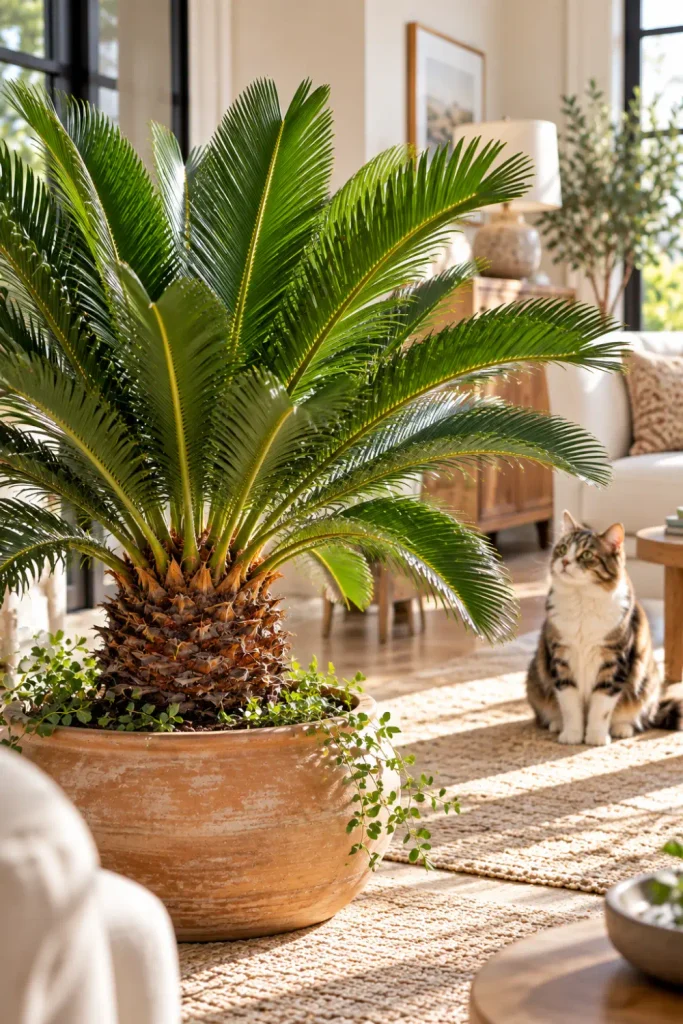
Toxicity: Extremely dangerous
The sago palm is a popular ornamental plant with a tropical appearance and stiff, feather-like leaves. Unfortunately, its attractive appearance hides a serious danger.
All parts contain toxic compounds, and the seeds are particularly concentrated sources of toxins that can cause severe liver damage and potentially fatal poisoning.
Simple steps:
- Remove sago palms from indoor and outdoor areas accessible to your cat.
- Contact a veterinarian immediately if you suspect your cat has chewed any part of the plant, even if it appears healthy.
– Tip: Don’t mistake a sago palm for a harmless miniature palm. Check the botanical name before purchasing palm-like plants.
3. Pothos: The Popular Trailing Plant to Watch
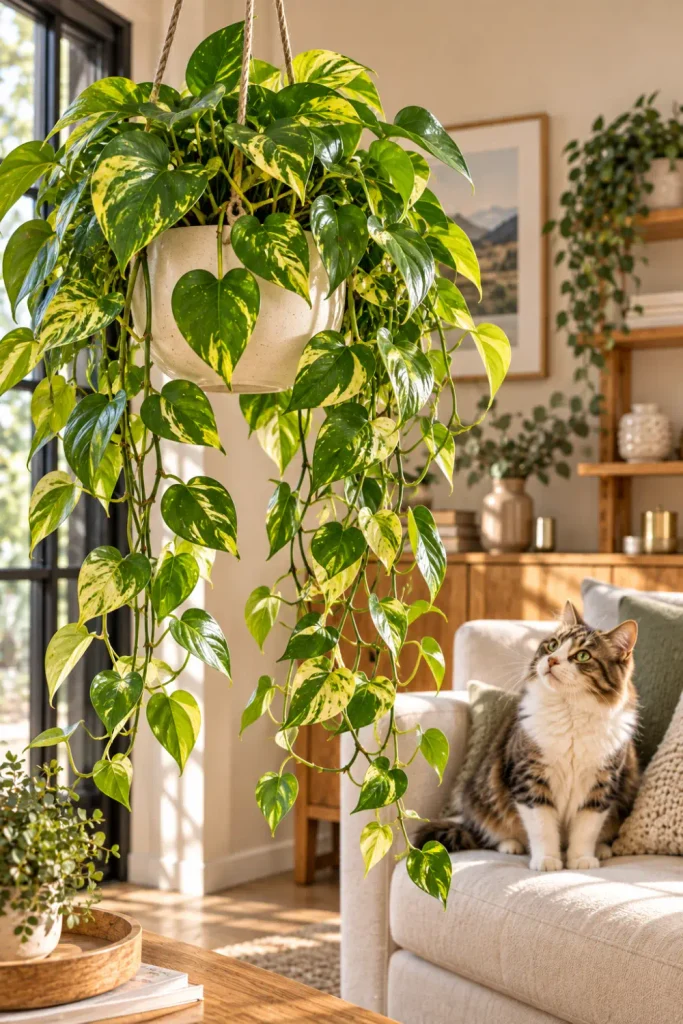
Toxicity: Causes significant mouth irritation
Golden pothos, also called devil’s ivy, is loved for its attractive, heart-shaped leaves and easy-growing trailing stems.
However, it contains insoluble calcium oxalate crystals.
When cats chew its foliage, these crystals can irritate the mouth and digestive tract, causing pain, drooling, vomiting and difficulty swallowing.
Simple steps:
- Identify all pothos varieties in your home, including golden and Marble Queen pothos.
- Replace them with cat-safe plants or move them to a home without cats.
– Tip: Hanging baskets aren’t reliable protection. Cats can climb, and trailing vines can hang within easy reach.
4. Peace Lily: An Elegant Plant With Hidden Dangers
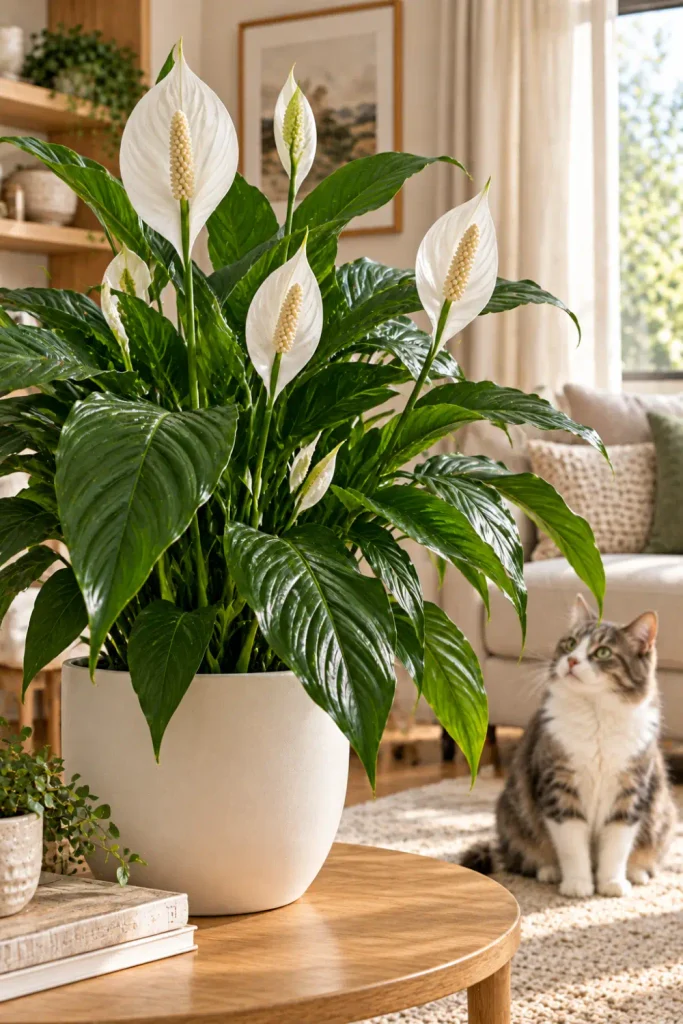
Toxicity: Causes oral and digestive irritation
Peace lilies are popular for their glossy green foliage and elegant white flowers. Despite their name, they aren’t true lilies.
They contain insoluble calcium oxalate crystals that can cause intense mouth discomfort, excessive drooling, vomiting and difficulty swallowing.
Unlike true lilies, peace lilies do not typically cause kidney failure in cats.
Simple steps:
- Remove peace lilies from rooms where cats spend time and consider replacing them with safer varieties.
- Watch for pawing at the mouth, drooling or vomiting if your cat has chewed the leaves.
– Tip: Don’t confuse peace lilies with true lilies. Both are unsuitable for homes with cats, but their toxic effects are different.
5. Philodendron: Attractive Leaves That Can Irritate
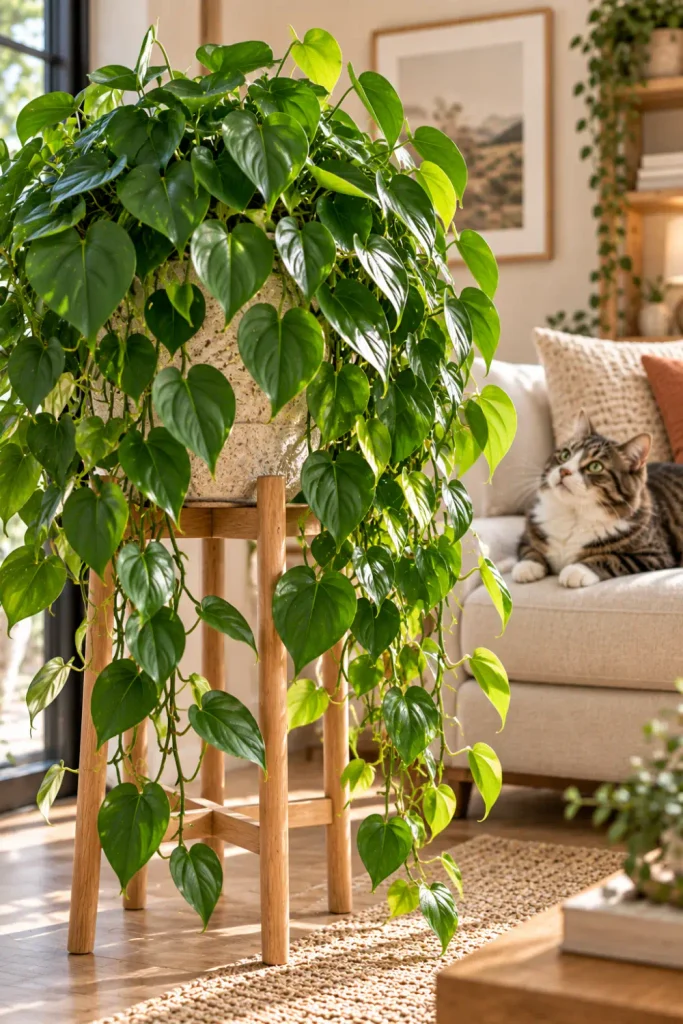
Toxicity: Causes significant mouth irritation
Philodendrons are common indoor plants because of their lush foliage and ability to grow in different conditions.
However, varieties such as heartleaf philodendron contain insoluble calcium oxalate crystals.
Chewing the leaves can cause oral pain, drooling, vomiting and swelling, which may make swallowing uncomfortable.
Simple steps:
- Identify heartleaf, velvet-leaf and other philodendron varieties in your home.
- Replace accessible philodendrons with non-toxic alternatives and clean up any fallen leaves.
– Tip: Check the plant’s botanical name when shopping because several philodendron varieties have different common names.
6. Dumb Cane: A Houseplant With Irritating Sap
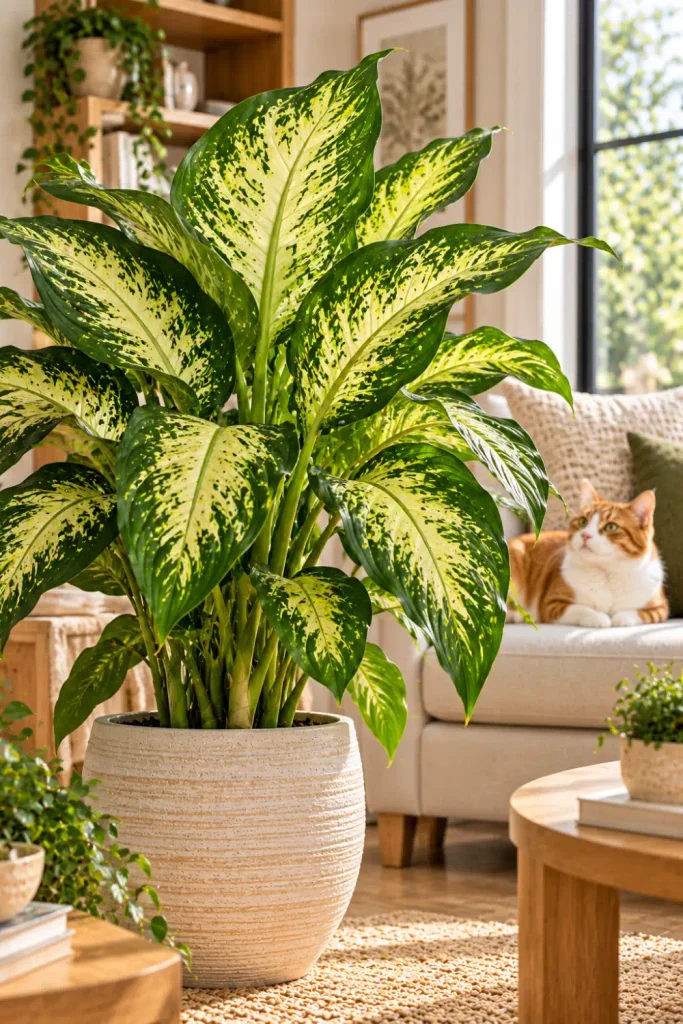
Toxicity: Causes significant mouth irritation
Dumb cane, scientifically known as Dieffenbachia, is recognised by its large, patterned leaves.
Although it makes an attractive decorative plant, its calcium oxalate crystals can cause intense irritation when chewed.
Affected cats may experience drooling, vomiting, oral pain and, in severe cases, swelling that interferes with breathing.
Simple steps:
- Remove dumb cane from your cat’s environment, particularly areas where it likes to explore.
- If your cat chews its leaves, contact your veterinarian, especially if you notice swelling or difficulty swallowing.
– Tip: Wear gloves when handling damaged dumb cane because its irritating sap can also affect human skin and eyes.
7. Snake Plant: A Low-Maintenance but Toxic Choice
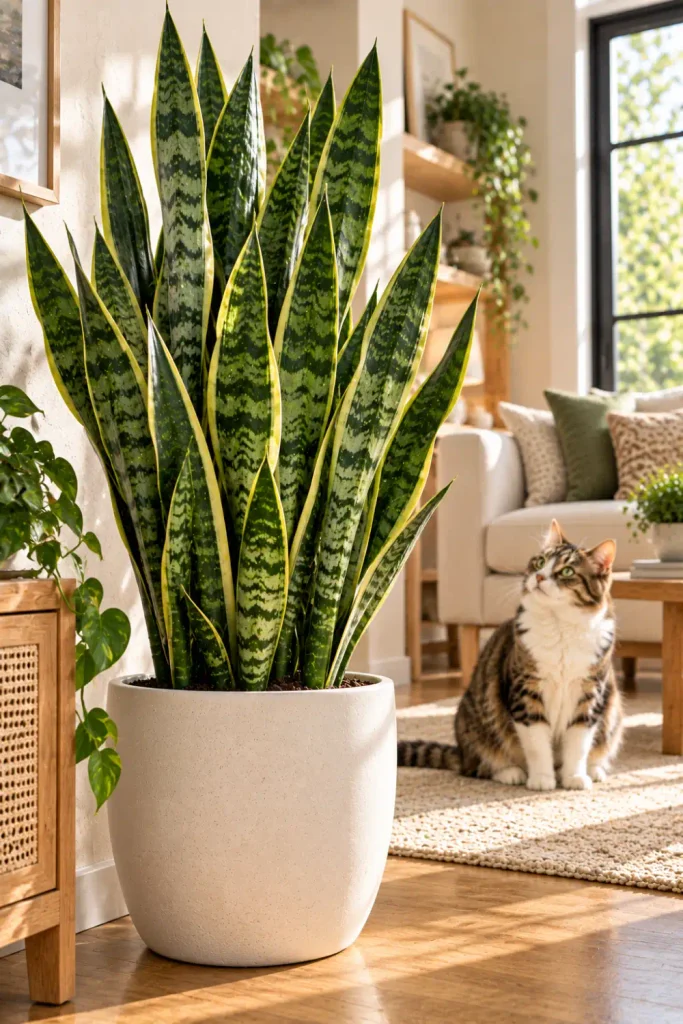
Toxicity: Causes gastrointestinal irritation
Snake plants are popular for their upright, sword-shaped leaves and ability to tolerate relatively little maintenance.
However, their leaves contain saponins that are toxic to cats. Chewing them can cause nausea, vomiting and diarrhoea.
Their sturdy leaves may look harmless, but they aren’t suitable for curious cats that enjoy chewing foliage.
Simple steps:
- Check your home for snake plants, including varieties sold as mother-in-law’s tongue.
- Replace them with cat-safe upright plants instead of relying on elevated shelves.
– Tip: Choose pet-safe plants with a similar architectural appearance if you enjoy the snake plant’s tall, structured look.
8. Aloe Vera: A Succulent That Isn’t Cat-Friendly
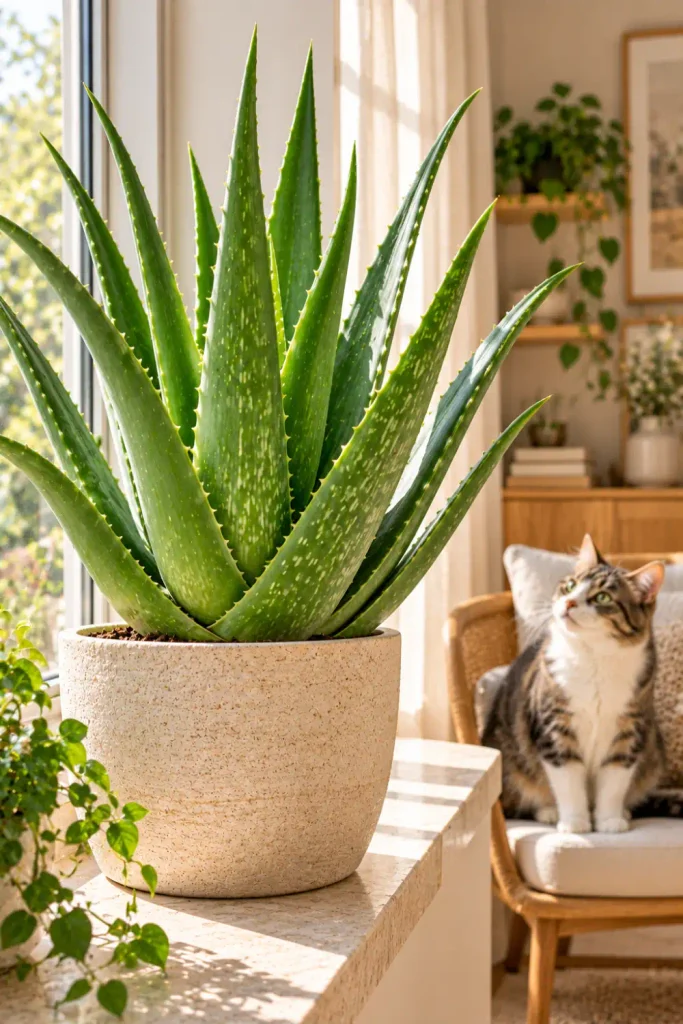
Toxicity: Causes gastrointestinal problems
Aloe vera is a familiar succulent often grown for its distinctive fleshy leaves and decorative appearance.
However, the plant contains saponins and anthraquinones that can harm cats. Ingestion may cause vomiting, diarrhoea and lethargy.
Although aloe gel is considered edible, that doesn’t make the entire plant safe for curious pets.
Simple steps:
- Check windowsills and sunny corners for aloe vera plants.
- Replace accessible aloe plants with verified cat-safe succulents.
– Tip: Don’t let your cat chew aloe leaves simply because their clear inner gel is commonly used in skincare products.
9. Jade Plant: A Small Succulent With Toxic Leaves
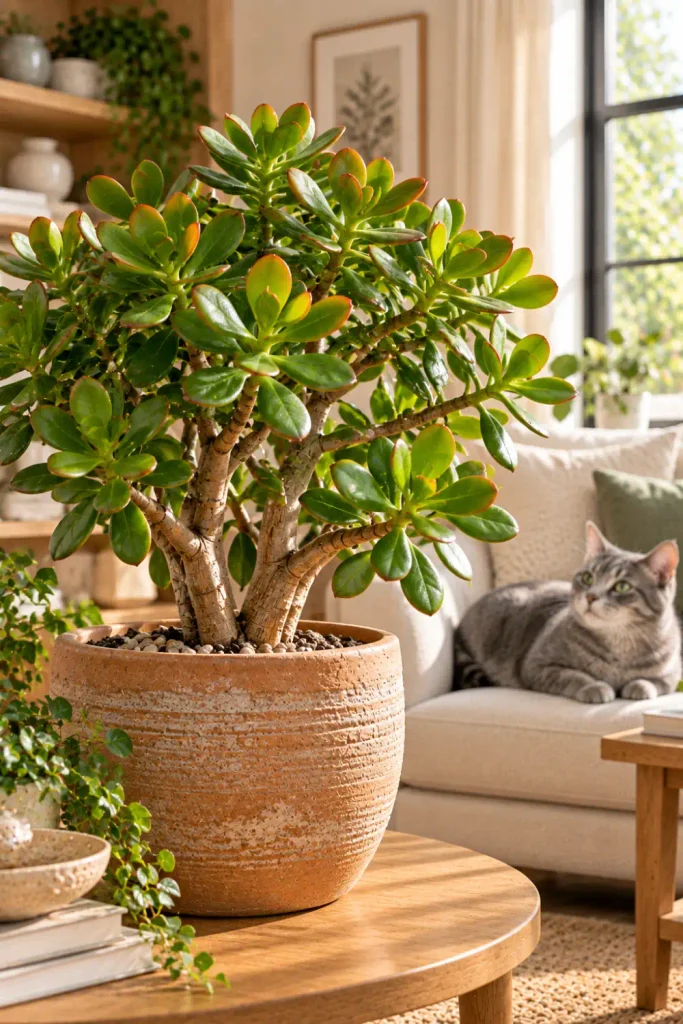
Toxicity: Causes gastrointestinal and neurological symptoms
Jade plants are widely appreciated for their thick, rounded leaves and miniature tree-like appearance.
However, they are toxic to cats, and ingestion can cause vomiting and depression.
Some affected animals may also develop poor coordination or muscle tremors, making jade an unsuitable choice for cat-friendly interiors.
Simple steps:
- Identify jade plants, including those sold as jade trees or baby jade.
- Replace them with non-toxic succulents if your cat can access their foliage.
– Tip: Avoid leaving fallen jade leaves on tables or floors where cats might mistake them for toys.
10. Dracaena: A Tropical Favourite to Keep Away
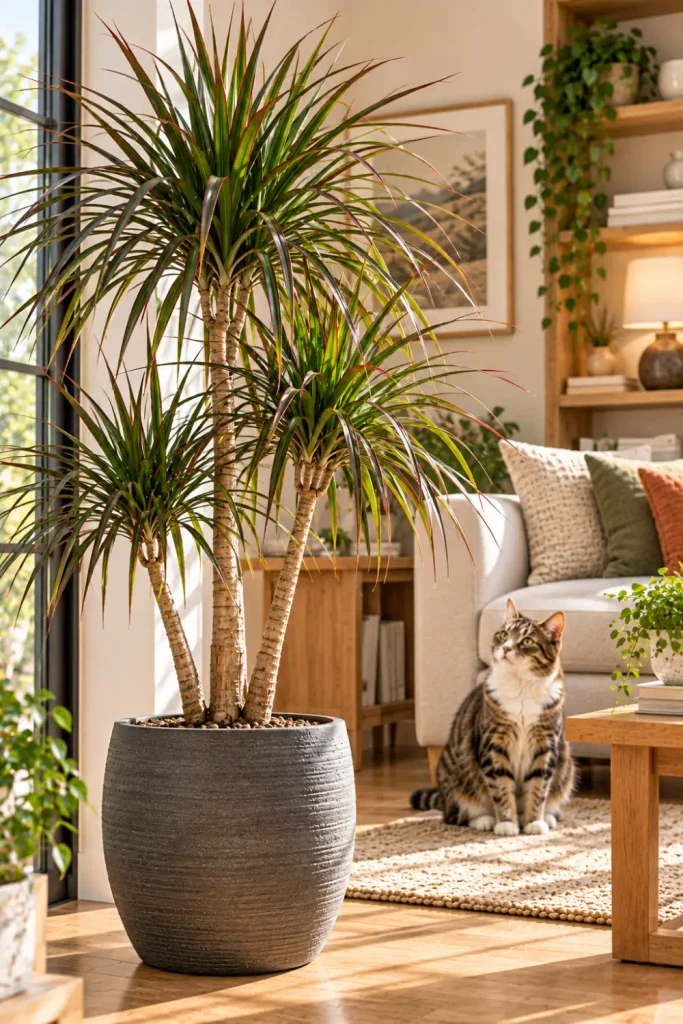
Toxicity: Causes digestive and other symptoms
Dracaena plants, including corn plants and dragon trees, are frequently used to add height and greenery to indoor spaces.
Unfortunately, they contain saponins that can cause vomiting, drooling and loss of appetite in cats. Larger exposures may also lead to weakness, depression and dilated pupils.
Simple steps:
- Identify dracaena varieties in your home, especially corn plants and dragon trees.
- Remove accessible plants and contact your veterinarian immediately if your cat chews them.
– Tip: Check plant labels carefully because dracaena varieties can look quite different while posing similar risks.
Final Thoughts: Create a Beautiful Home Without Putting Your Cat at Risk
Knowing which plants are toxic to cats makes it easier to create a safer home without abandoning your love of indoor greenery.
Start by identifying the plants you already own, removing particularly dangerous varieties and choosing verified non-toxic alternatives.
Pay special attention to true lilies and sago palms because exposure can be life-threatening. For other toxic plants, don’t assume that a small bite is harmless.
Watch for changes in appetite, vomiting, drooling, unusual behaviour or difficulty swallowing, and seek veterinary advice whenever ingestion is suspected.
Remember: If your cat has eaten a potentially poisonous plant, remove it from the area and contact your veterinarian promptly.
Never induce vomiting or give home remedies without professional guidance. Some poisonings require urgent treatment even before symptoms appear.
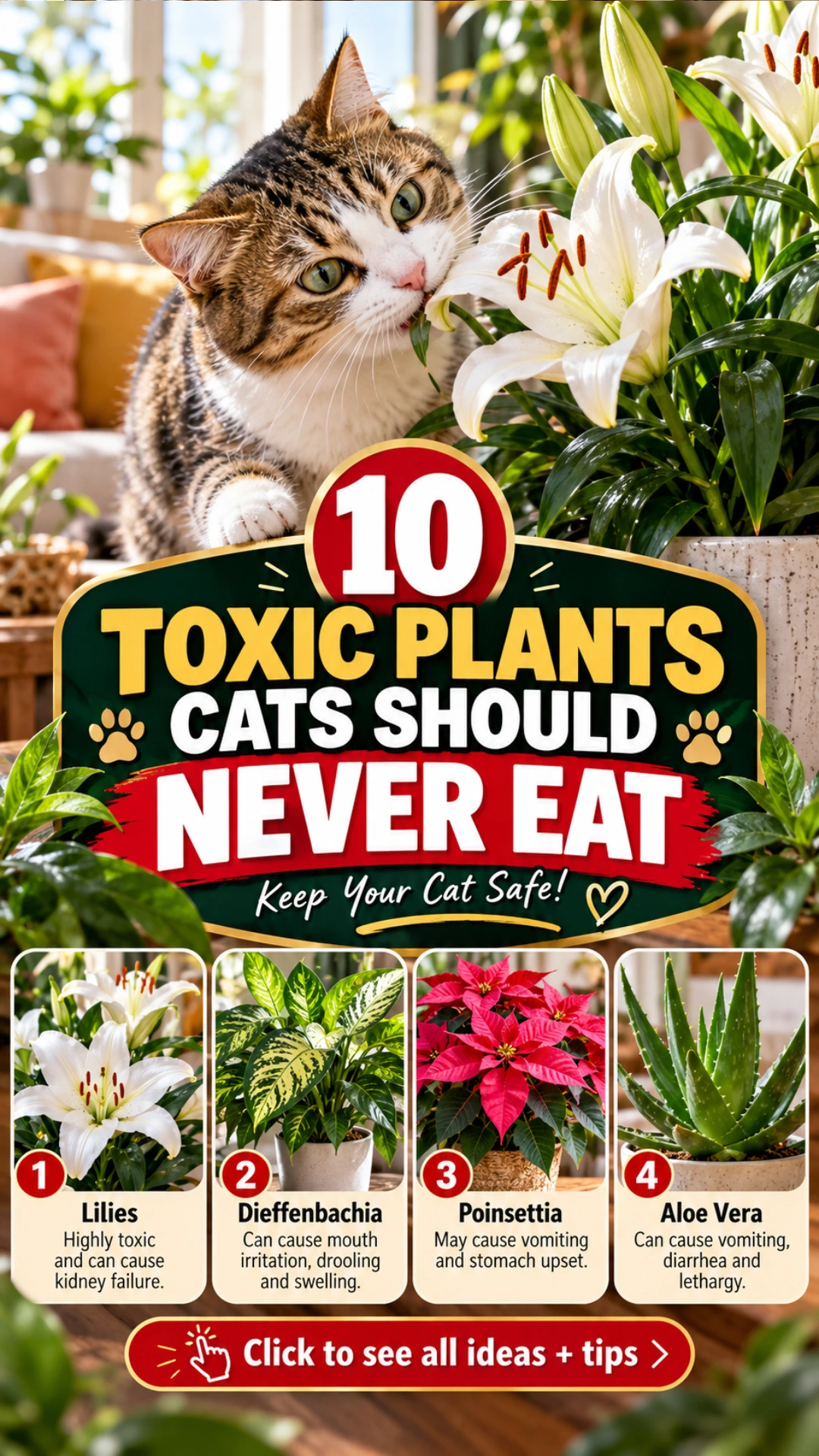
Plants That Are Toxic to Cats: 10 Common Houseplants to Avoid
Plants That Are Toxic to Cats can be dangerous in a pet-friendly home. Learn which common houseplants may be poisonous to cats, including popular indoor plants to avoid, cat-safe plant considerations, and safer decorating tips for cat owners. Save this guide for later.
Pin it on Pinterest